THE PANTHEON
The Roman gods and the Greek and Egyptian gods behind them; the goddesses whose stories made the myths complicated; the one who turns people to stone; and the witch who melts. Every picture on this page is credited to its maker where you can see it. Every video is a link to its maker's own page, never a copy.
The story, never the claim. Nothing here says a god is real. It says what the books say, and which book.
Same gods, different names?
Mostly matched, not identical. The Romans matched foreign gods to their own by what each god did, a habit called interpretatio Romana; the phrase is Tacitus's. Zeus became Jupiter, Hera Juno, Poseidon Neptune, Ares Mars, Aphrodite Venus, Athena Minerva, Hades Pluto, Hermes Mercury, Artemis Diana, Demeter Ceres.
- Zeus and Jupiter share a root: both descend from an old Indo-European sky-father, so that match is older than Rome.
- The fit is loose in places. Ares was a minor figure in Greek worship and sneered at by the poets. Mars was father of the Roman people and central to Rome's oldest worship.
- Some Roman gods have no Greek twin: Janus (doorways, beginnings, two faces), Terminus (boundaries).
- Apollo kept his Greek name in Rome.
- Greek religion gave stories. Roman religion leaned toward ritual and law, and its gods are often more abstract.
Why they fought and broke things
The surviving tellings are Greek; Rome inherited them.
- The Titan war. Zeus (Jupiter) against his father Cronus (Saturn) and the Titans, ten years long in Hesiod's Theogony, ending with the Titans chained in Tartarus. It is the succession myth: Uranus overthrown by Cronus, Cronus by Zeus.
- The Giants. Born of Earth from the blood of Uranus, they storm Olympus. Hesiod gives no reason. Later writers blur this war with the Titans'.
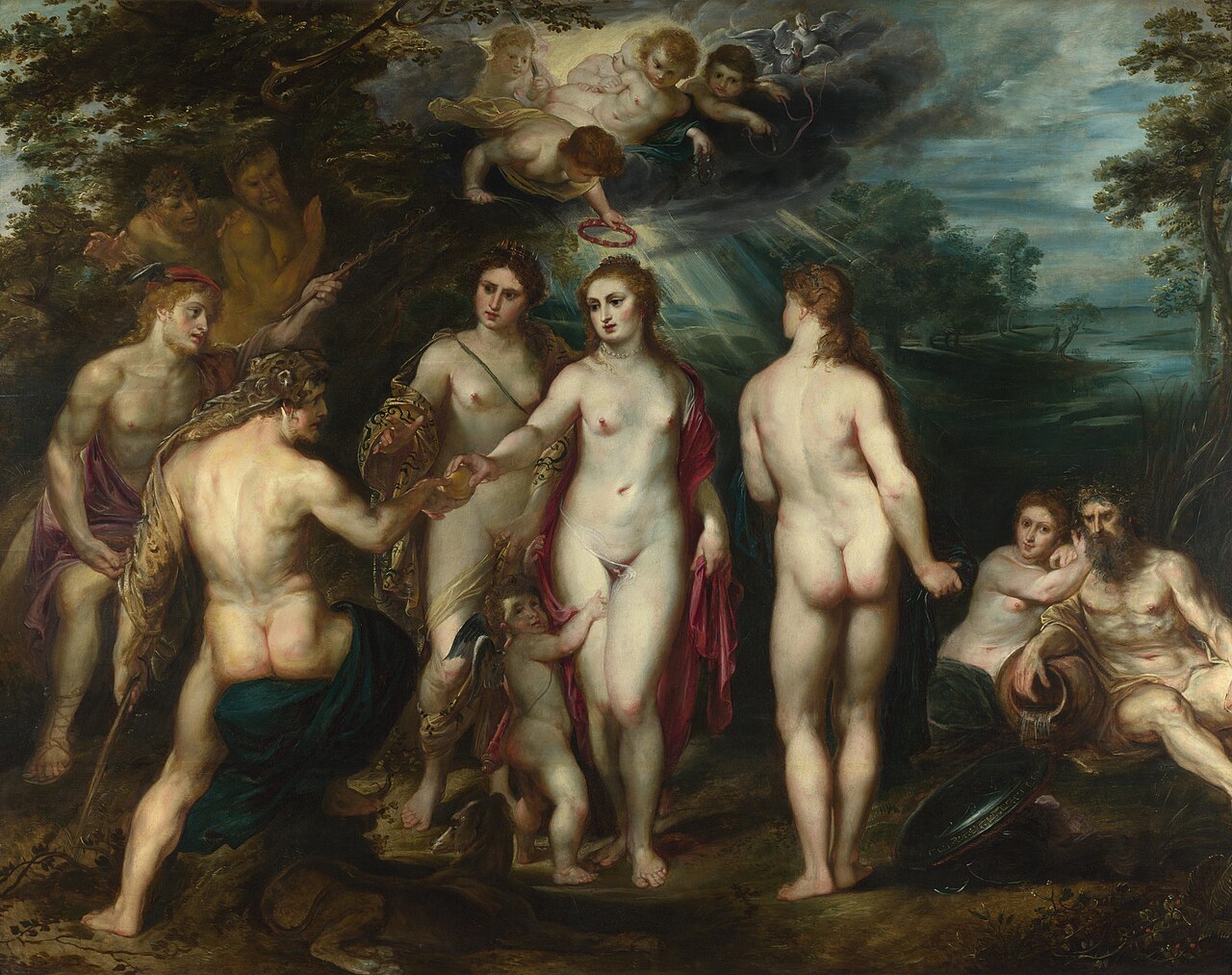
- Troy. The story says a goddess beauty contest, the Judgment of Paris, set off the Trojan War.†
The broken things line up with real forces: earthquakes were Neptune's, volcanoes Vulcan's forge, storms Jupiter's. The force is an event. The god is the old word people reached for it.
Venus and Juno
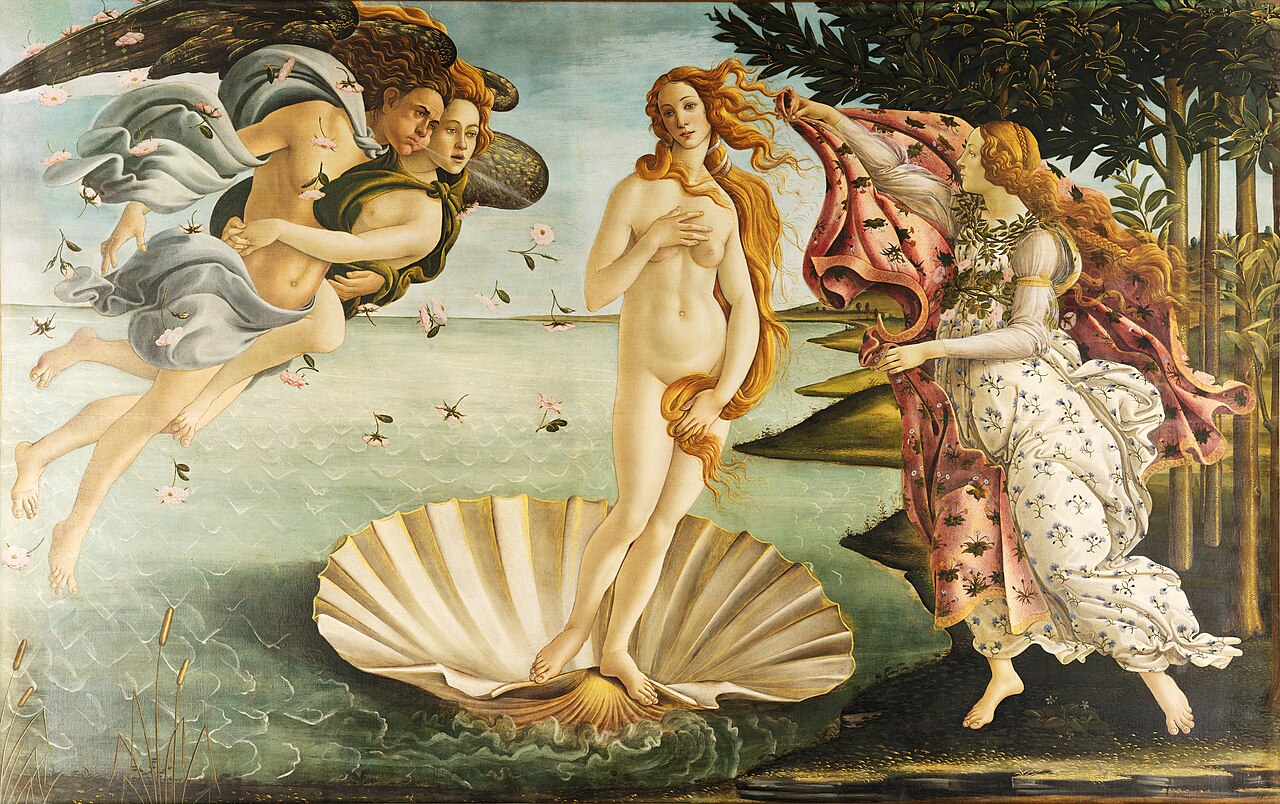
Venus (Aphrodite) rises from the sea foam in Hesiod's Theogony, where the severed parts of Uranus fell.† She is mother of Aeneas, so the Romans called her mother of their line.
Juno (Hera) is queen of the gods. In Virgil's Aeneid, Juno's unforgetting anger against the Trojans drives the storm and the years of wandering that Aeneas suffers.†
Ceres and Proserpina
Greek names Demeter and Persephone. Two tellings matter: the Homeric Hymn to Demeter, and Ovid's Metamorphoses V.
Ovid's version
- Cupid's arrow strikes Pluto. He sees Proserpina picking flowers in Sicily and carries her off in his chariot into the earth. The nymph Cyane tries to block him and he ignores her.
- Ceres searches, learns from the nymph Arethusa that her daughter is below, and appeals to Jupiter.
- Proserpina had eaten pomegranate seeds, seven in the translation found. Ascalaphus, the only witness, tells, and she turns him into a screech-owl.
- Jupiter's compromise: six months below, six with her mother. Ceres's grief stops the crops while the girl is gone.
The older Greek version
In the Hymn the witnesses are Hecate, who heard the cry from her cave, and Helios, the sun, who tells Demeter that Zeus gave the girl to Hades as his wife. It is read as the story behind the Eleusinian mysteries.
In Rome
A temple on the Aventine to Ceres, Liber and Libera was vowed around 496 BC and dedicated in 493 (some say 494 or 490). One tradition says the Sibylline books advised it to end a famine, with the Eleusinian triad as the model; more cautious accounts say it began as a cult of farming and fertility for Rome's common people. A joint rite of Ceres and Proserpina was held there in 205 BC.
Isis and Osiris
Isis is Egyptian, not Roman, though her worship spread into the Roman world.† The main continuous source is Plutarch's On Isis and Osiris, from around 100 AD: the text on Perseus.
- Osiris, the king, is killed by his brother Set (Plutarch's Typhon), who cuts the body into fourteen pieces and scatters them. Diodorus counts sixteen.
- Isis recovers the parts and holds a funeral at each. The male member had been eaten by fish in the river, so she makes a replica and consecrates it.
- Horus is born. The rest of the myth is his fight with Set.
Plutarch's own readings are allegories: the fourteen pieces are the fourteen days the moon wanes; Isis is the earth, Osiris the Nile that fertilizes it, Horus the fruit; the world is a battlefield of good against evil. Those are his readings, not the Egyptian texts' claim.
Who turns people to stone
Medusa
In Ovid's telling (Metamorphoses IV), the Sovereign of the Sea takes her in chaste Minerva's temple; she turns her head away and holds her shield before her eyes. "To punish that great crime Minerva changed the Gorgon's splendid hair to serpents." The goddess punishes the victim, and Minerva then wears the snakes on her breast to frighten her foes. An older version has the Gorgons as monsters from birth.†
Anyone who meets her gaze turns to stone, and her head keeps the power after Perseus beheads her.
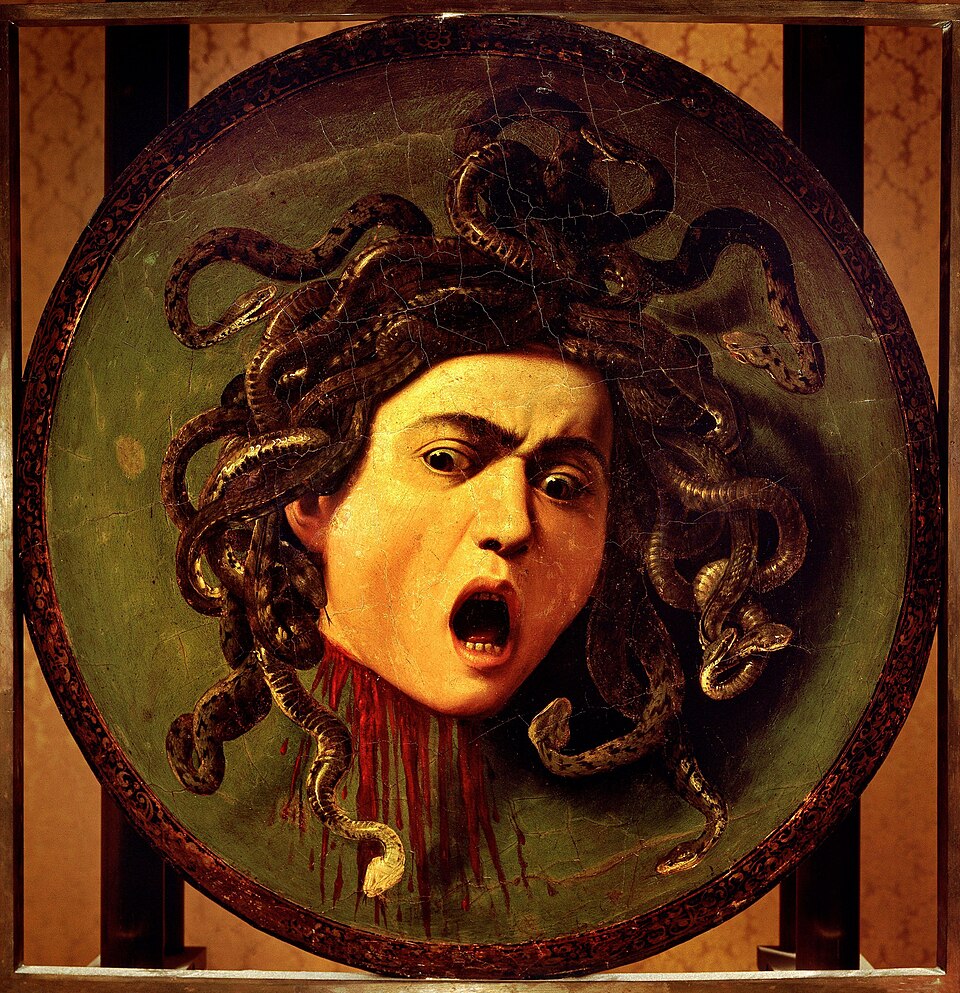
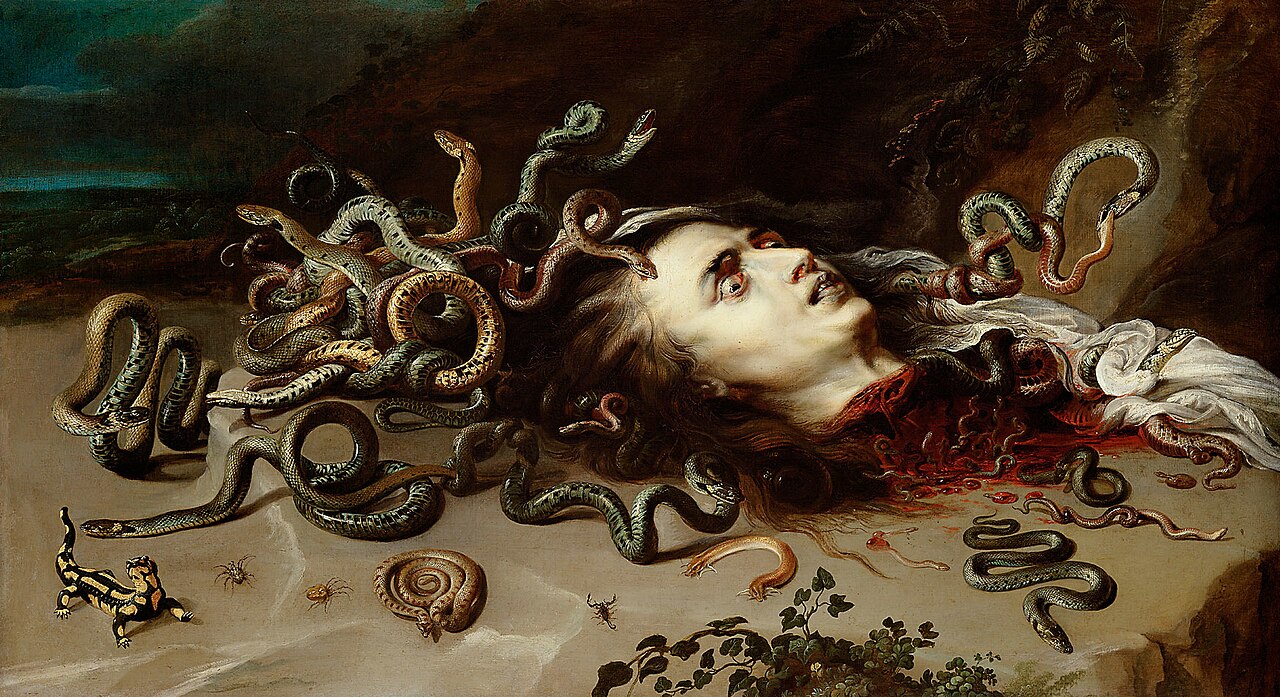
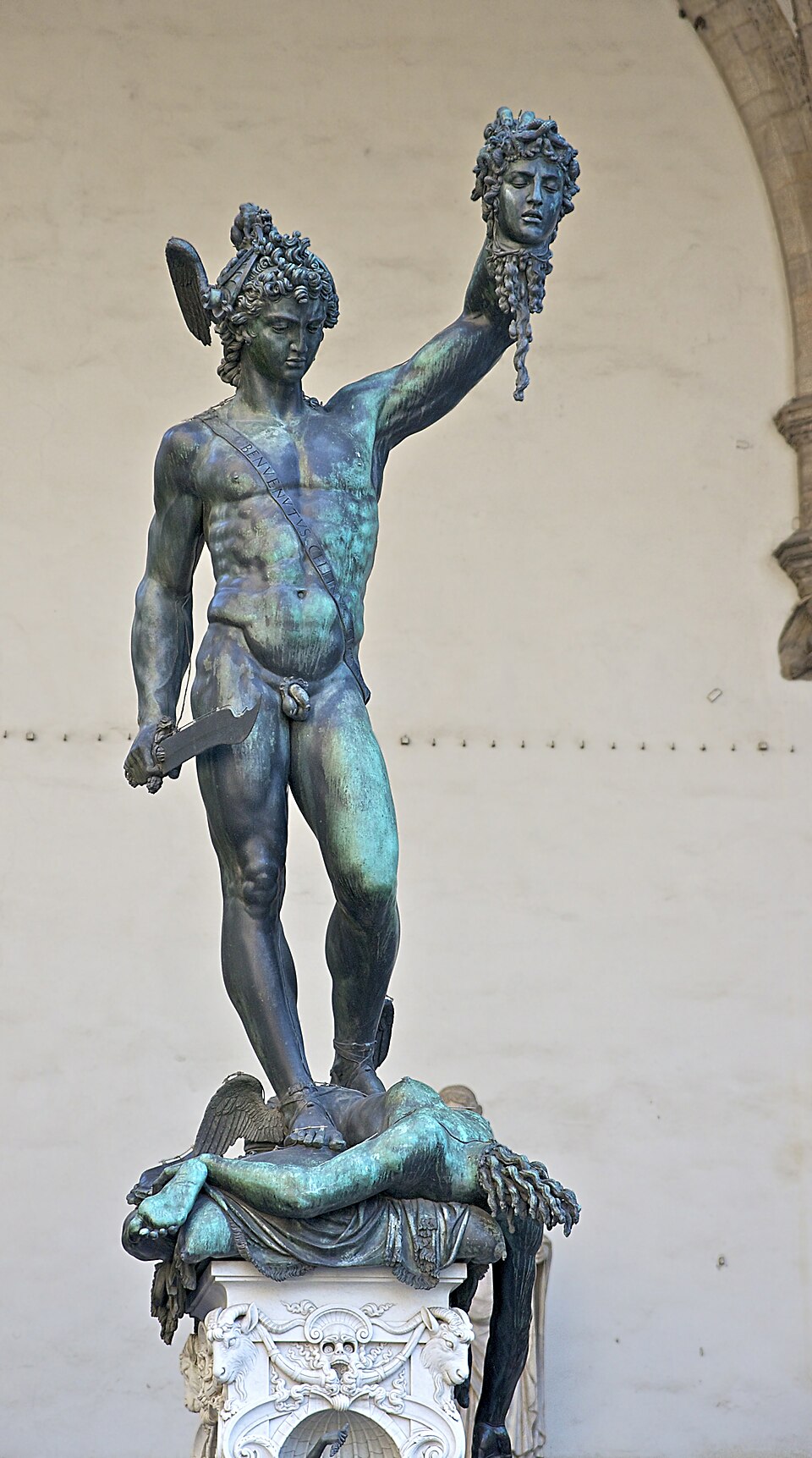
- Caravaggio, MedusaUffizi Galleries, "Uffizi for everyone", an international-signs guide. (The Uffizi's page dates the painting 1595; other sources say 1597.)
- The Loggia dei LanziUffizi Galleries, the open-air gallery where Cellini's Perseus stands
Atlas
Perseus turns Atlas to stone with the head. In Ovid, "Atlas, huge and vast, becomes a mountain. His great beard and hair are forests, and his shoulders and his hands mountainous ridges, and his head the top of a high peak. His bones are changed to rocks."
Niobe
Niobe boasts over the goddess Latona (Leto). Apollo and Diana kill her children. Then, in Ovid (Metamorphoses VI), "a chill of marble spread upon her flesh." A whirlwind carries her to a mountain top in her native land, "and to this day the marble drips with tears." What turns Niobe to stone is divine punishment, not Medusa.
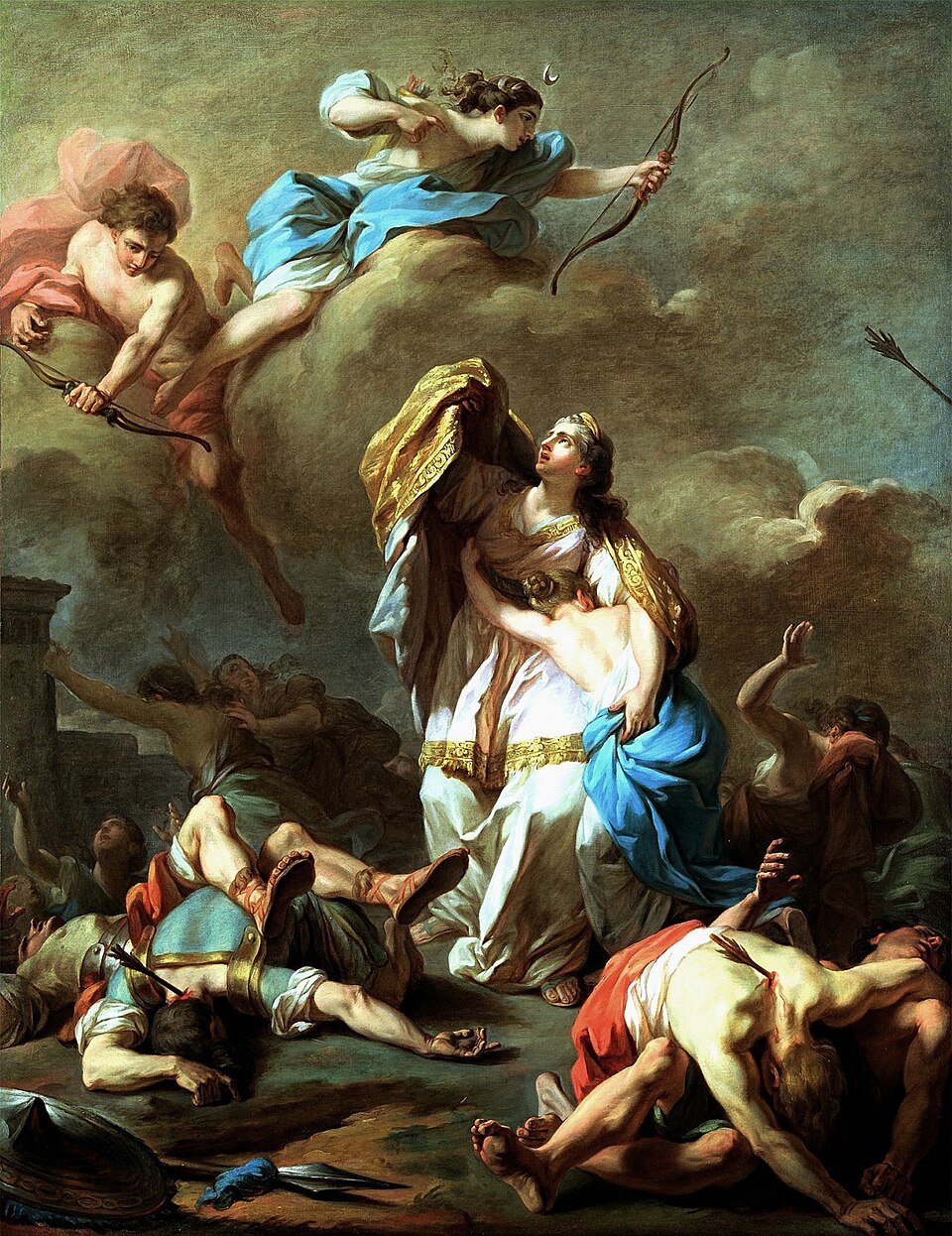
Roman names for the figures: Minerva is Athena, Latona is Leto, Diana is Artemis, Neptune is Poseidon. Perseus keeps his name. Sources: Ovid, Metamorphoses IV and VI, on Theoi and Theoi.
The Wicked Witch of the West
From Baum's The Wonderful Wizard of Oz (1900), which is in the public domain in the USA: the text on Project Gutenberg.
- She has one eye, "yet that was as powerful as a telescope, and could see everywhere."
- She sends wolves, crows and bees against the travellers. The Winged Monkeys obey whoever holds the Golden Cap, and she holds the Silver Shoes.
- Dorothy, angry, dashes a bucket of water over her and she melts "like brown sugar." She does not turn anyone to stone.
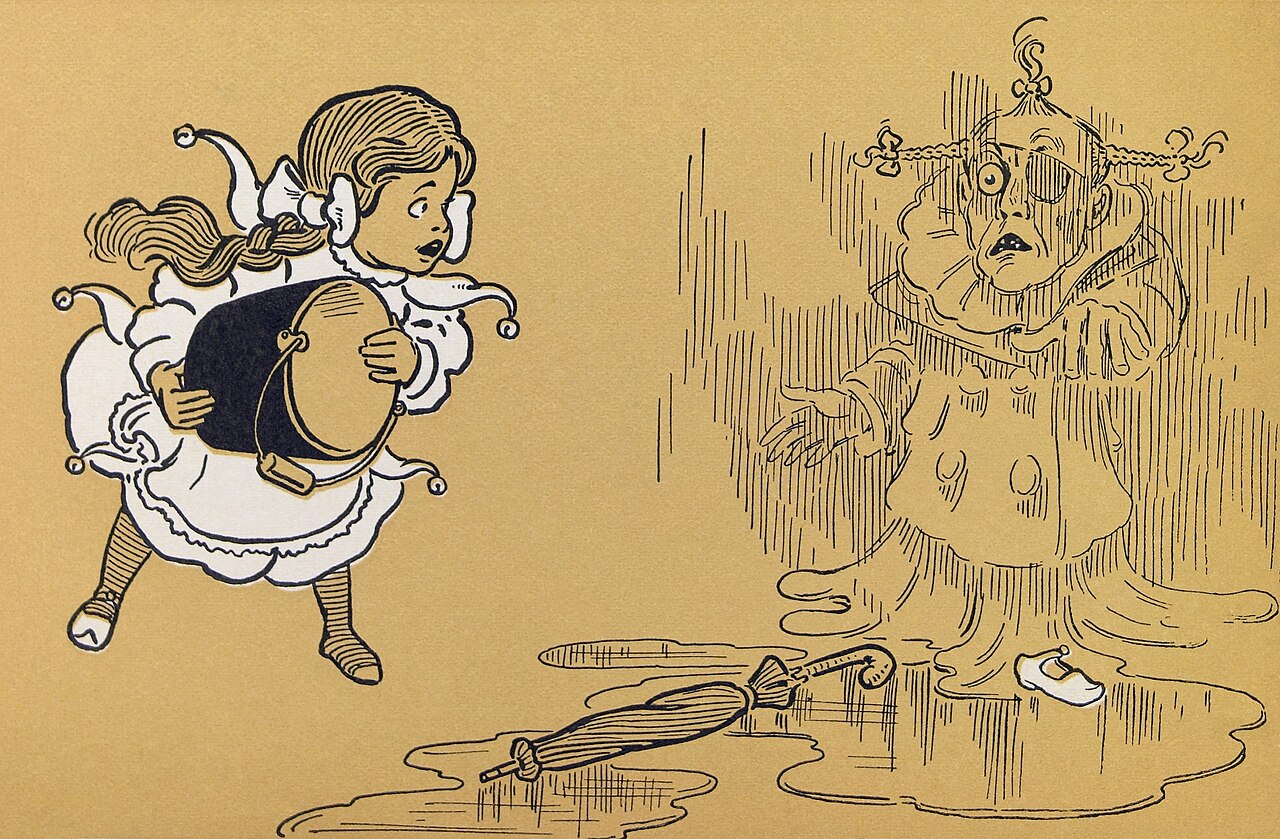
The 1939 film's green skin and pointed hat are the film's, not Baum's, and the film is not in the public domain. The station shows none of it and links to none until an official upload from the rights holder is confirmed.
The old word "witch" is on the Lexicon only where the desk has signed it.
The little people
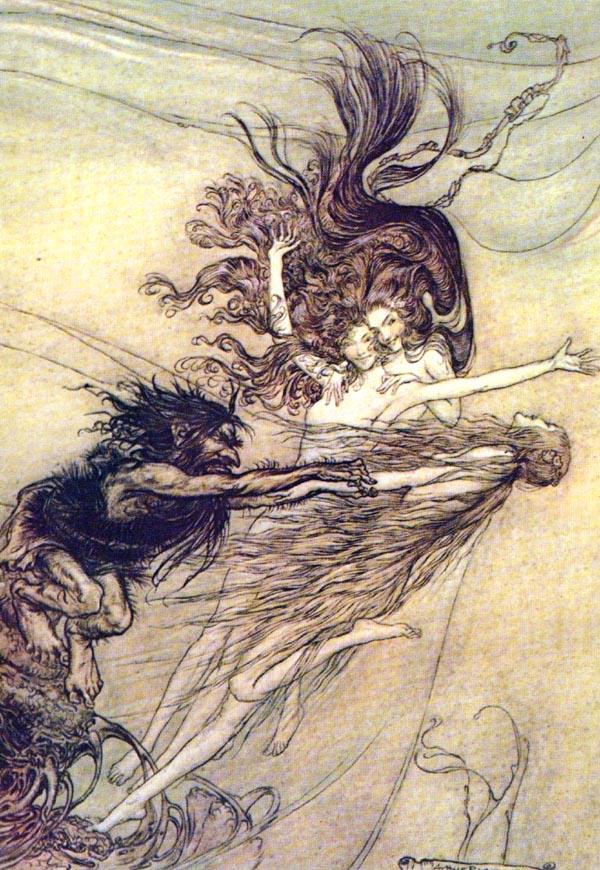
Dwarfs, elves, sprites and jinn. The pattern runs through all four: an old word for something small, hidden or half-seen gets reused for something real that does not yet have a name of its own.
Dwarfs
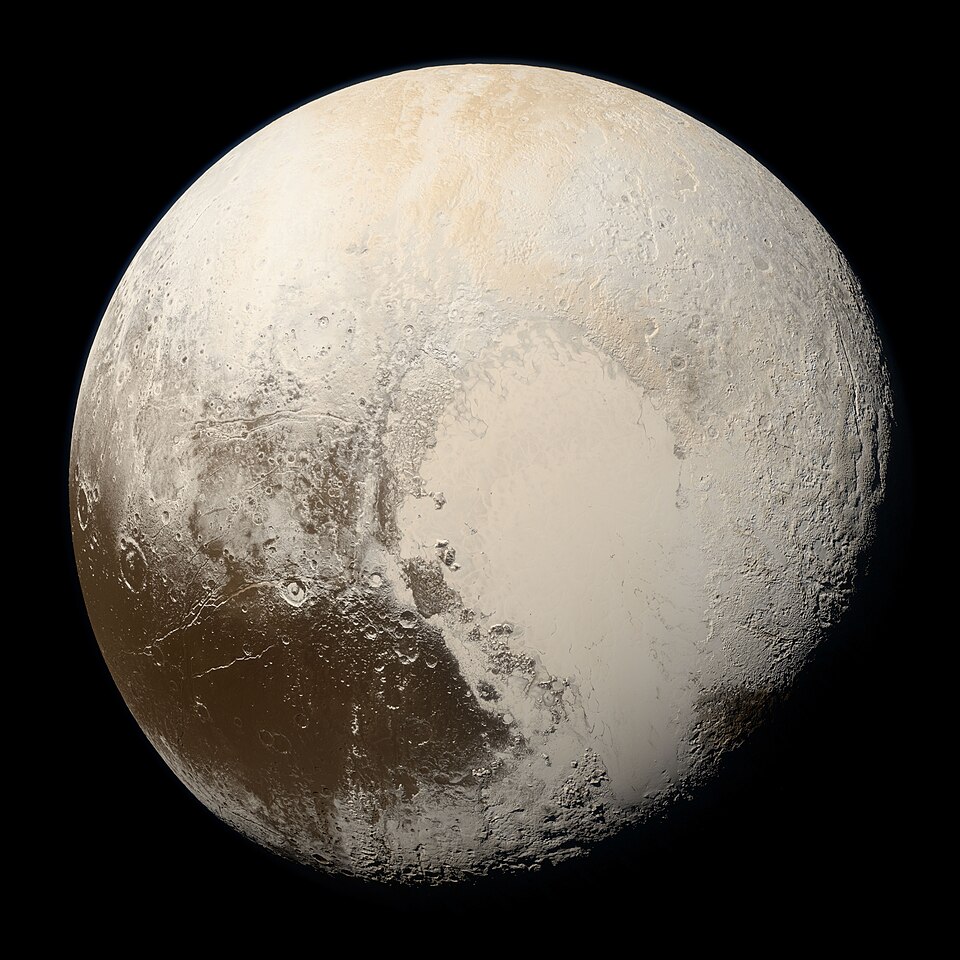
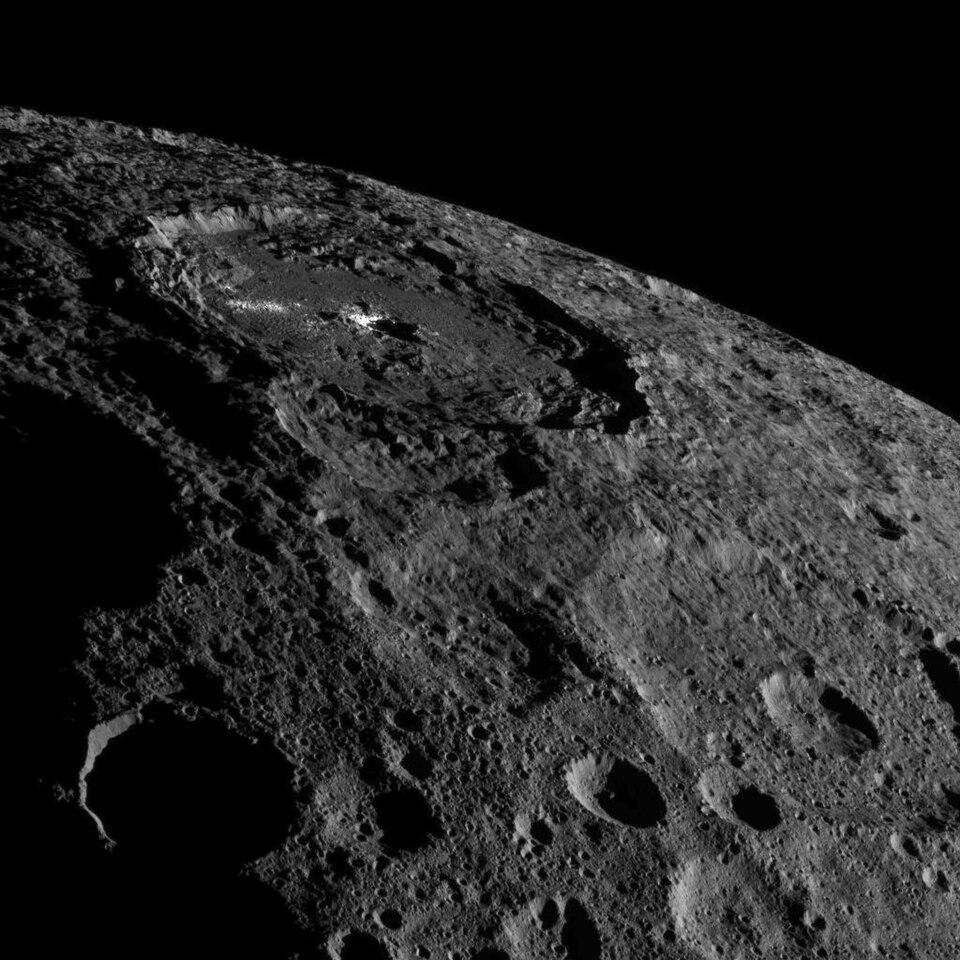
In the Norse Eddas the dvergar are the craftsmen under the rock.† In 2006 the International Astronomical Union made "dwarf planet" an official class: a body that orbits the Sun and is round, but "has not cleared the neighbourhood around its orbit." NASA's Dawn became the first spacecraft to orbit one, Ceres, on 6 March 2015. Ceres is named for the Roman goddess of grain.
Elves
Iceland's hidden people, the huldufólk, are the most public case. In March 2015 a 70-tonne rock in the Gálgahraun lava field, believed by some to be an elf church, was moved to make way for a road. The Icelandic Road and Coastal Administration's stock reply to media questions says, in part, that "issues have been settled by delaying the construction project so that the elves can, at a certain point, move on." In October 2025 the same agency was reported to have consulted a specialist in speaking with the hidden people before building a bridge, and to have been told the island held elves, not ghosts. Sources: Iceland Monitor, 2015; Reykjavík Grapevine, 2025.
Sprites and elves in the sky
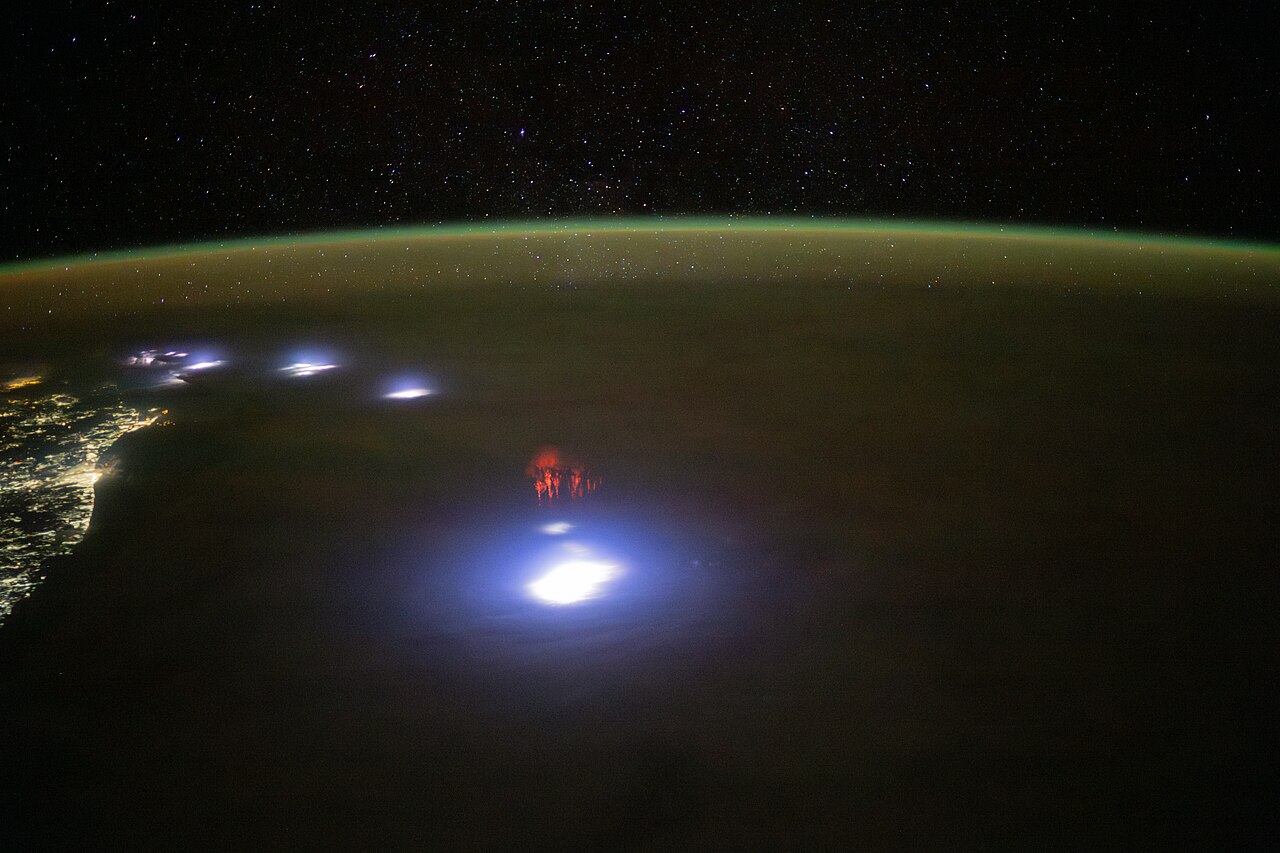
The same two words are the official names of real events. Above thunderstorms there are brief flashes called sprites, and expanding rings of light called elves. NASA's Johnson Space Center calls them "names straight out of a fairy tale." The European Space Agency describes sprites as flashes caused by electrical breakdown in the mesosphere that "resemble reddish jellyfish with tentacles streaming down," and elves as "concentric rings that often appear as a dim, expanding glow 400 km wide." The first sprite was documented in 1990.
Jinn
The Qur'an has a chapter named for them (72), and the Thousand and One Nights gave the world the genie in the bottle. The word turns up in current events in three ways on the Lexicon: an Indian chief minister saying his government put the COVID-19 "Jinn" back in a bottle (13 February 2022); Malaysia's health minister joking that he used "four jinn vaccines" (17 October 2021); and the Malaysian Federal Territory Mufti's department writing that belief in the existence of jinn and shaytan is obligatory for every Muslim (29 January 2020). The station logs the saying and not the said.
The sea
Mermaids, from the logbooks
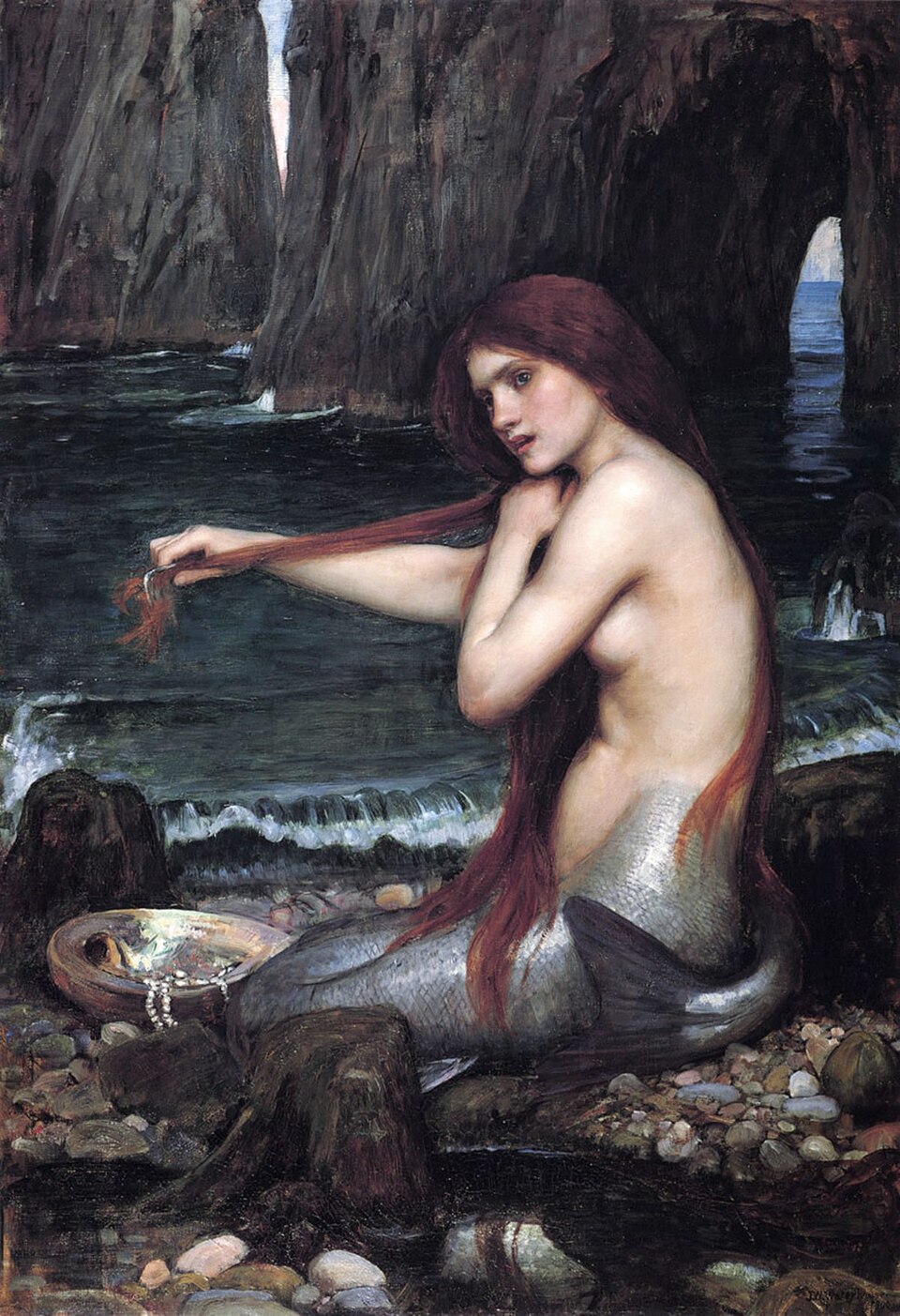
Two sea logs say it plainly. Columbus's journal for 9 January 1493, off Hispaniola, records that he "quite distinctly saw three mermaids, which rose well out of the sea; but they are not so beautiful as they are said to be, for their faces had some masculine traits." The Smithsonian reads these as manatees (its page). Henry Hudson's ship's journal for 15 June 1608 has "one of our companie looking over boord saw a mermaid," with a tail "like the tayle of a porposse, and speckled like a macrell," and names two men who saw it, Thomas Hilles and Robert Rayner (quoted by The Word Wenches; the Purchas printing is the primary).
In 2012 the US National Ocean Service answered viewers who had taken a fictional TV show for a documentary: "No evidence of aquatic humanoids has ever been found." (NOAA's page.)
The kraken
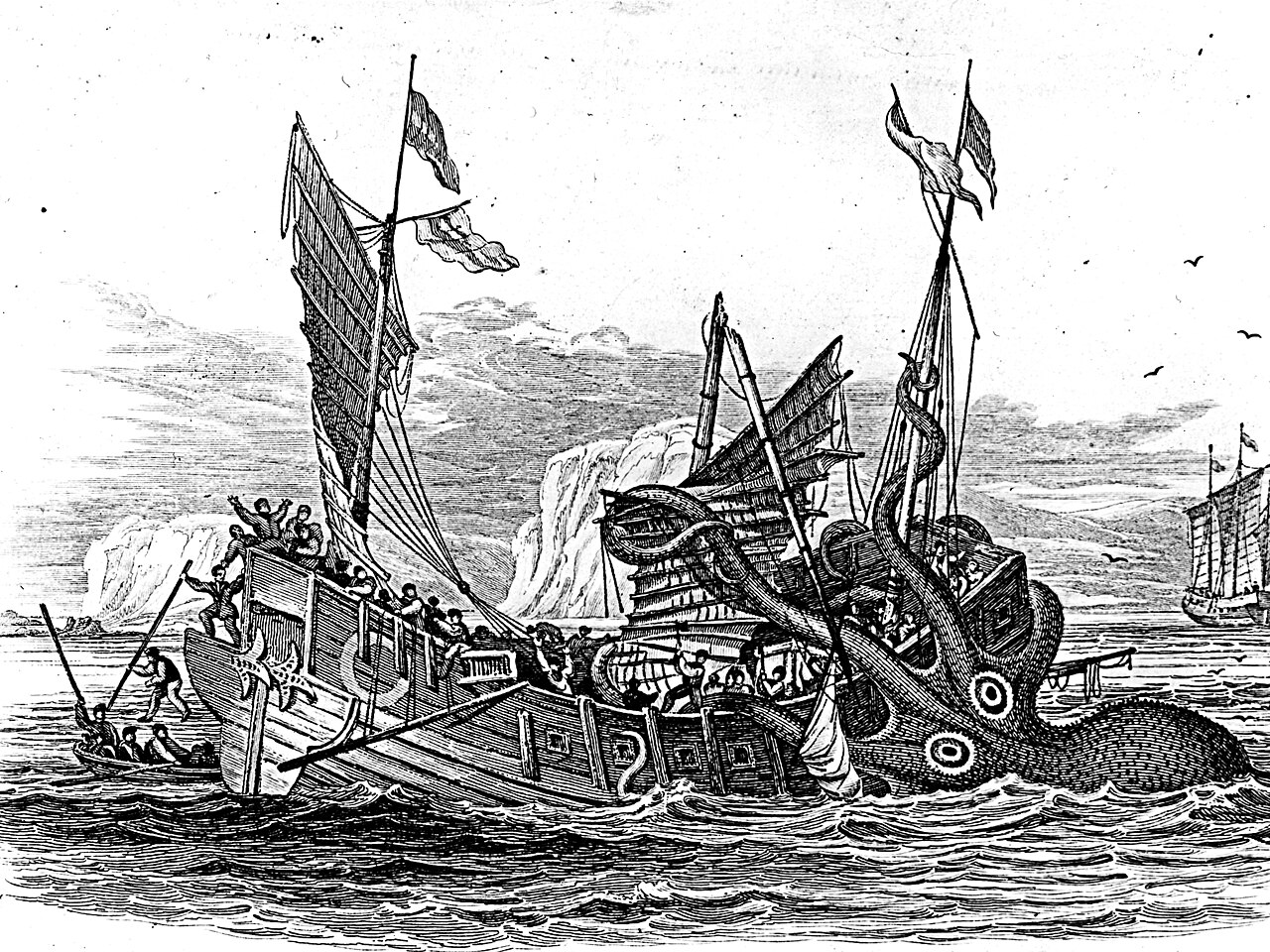
Erik Pontoppidan's Natural History of Norway (1752) wrote down what fishermen told him: "Our fishermen unanimously affirm, and without the least variation in their accounts" that where they expect eighty fathoms of water they sometimes find twenty, and know the Kraken is below. He calls it "the largest and most surprising of all the animal creation" (English text of 1755, quoted in Henry Lee, Sea Monsters Unmasked). Tennyson wrote it a poem in 1830, "The Kraken sleepeth." Science named the giant squid in 1857, and the Smithsonian calls it "likely the inspiration for the legendary kraken" (Smithsonian Magazine, 2011). In late November 1861 the French navy corvette Alecton, under Captain Bouyer, met a live giant squid near Tenerife; accounts differ on the date and on whether cannon or muskets were used.†
Unidentified things in the ocean
This one is a record, not a word. On 27 April 2020 the Pentagon released three Navy videos after the Navy had confirmed in 2019 that they were authentic. One is the November 2004 infrared clip from the USS Nimitz carrier group off San Diego; the other two are from January 2015. Commander David Fravor, who flew that day, described a white, Tic Tac shaped object above a disturbance in the water. The Navy does not say the videos show alien life; sceptics offer drones, and a submarine for the water.† The station shows none of the footage; the account is in The War Zone's report of the release.
The spirits of the house
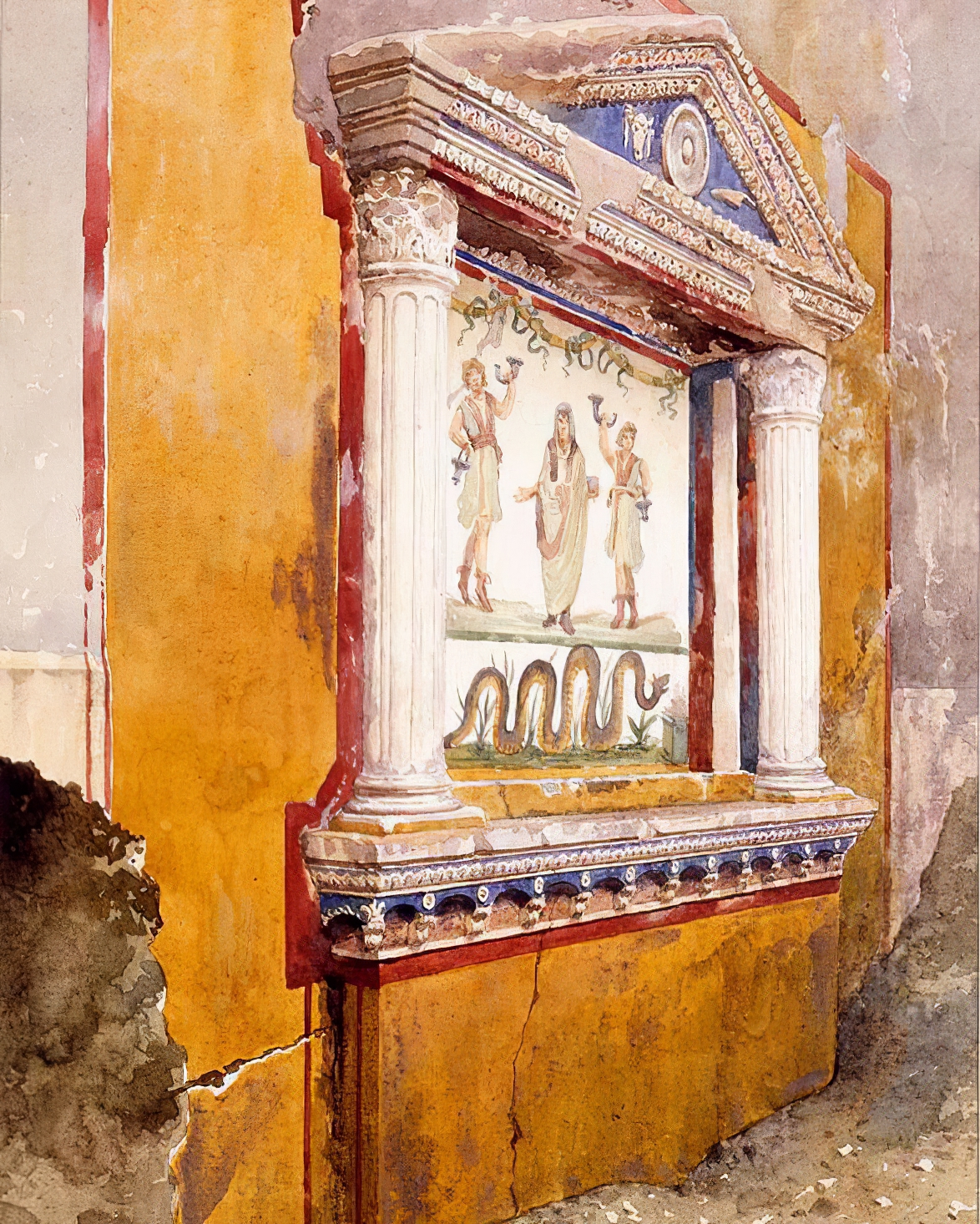
The big gods lived on Olympus and in the temples. The small ones lived at home. Every Roman house kept a painted shrine, the lararium, and fed it daily.†
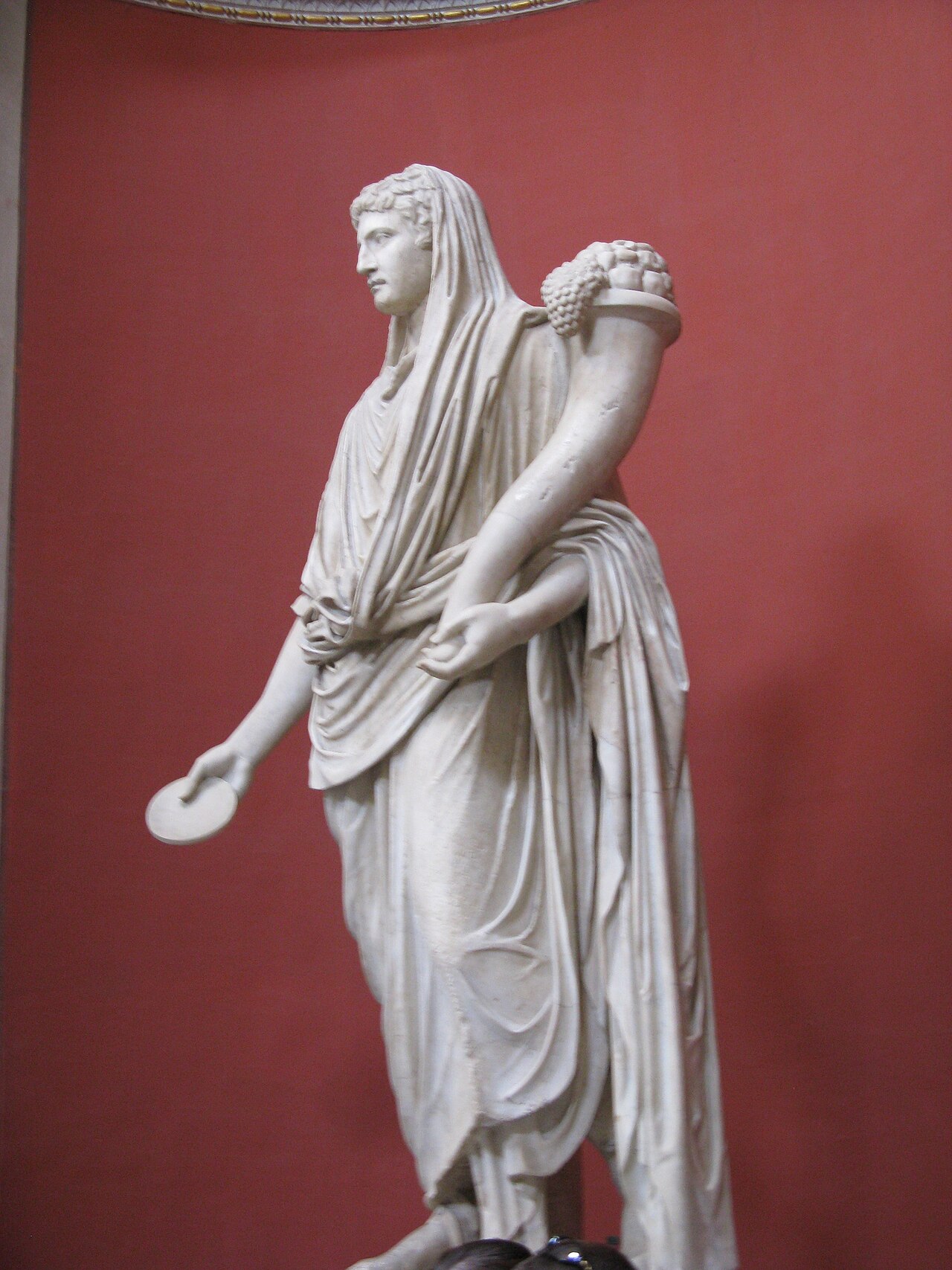
- The genius. Every man was born with one: his own guardian spirit, the power that made him him and kept the family line going. On his birthday the house honoured it with wine, flowers and incense. A woman's spirit was her juno.†
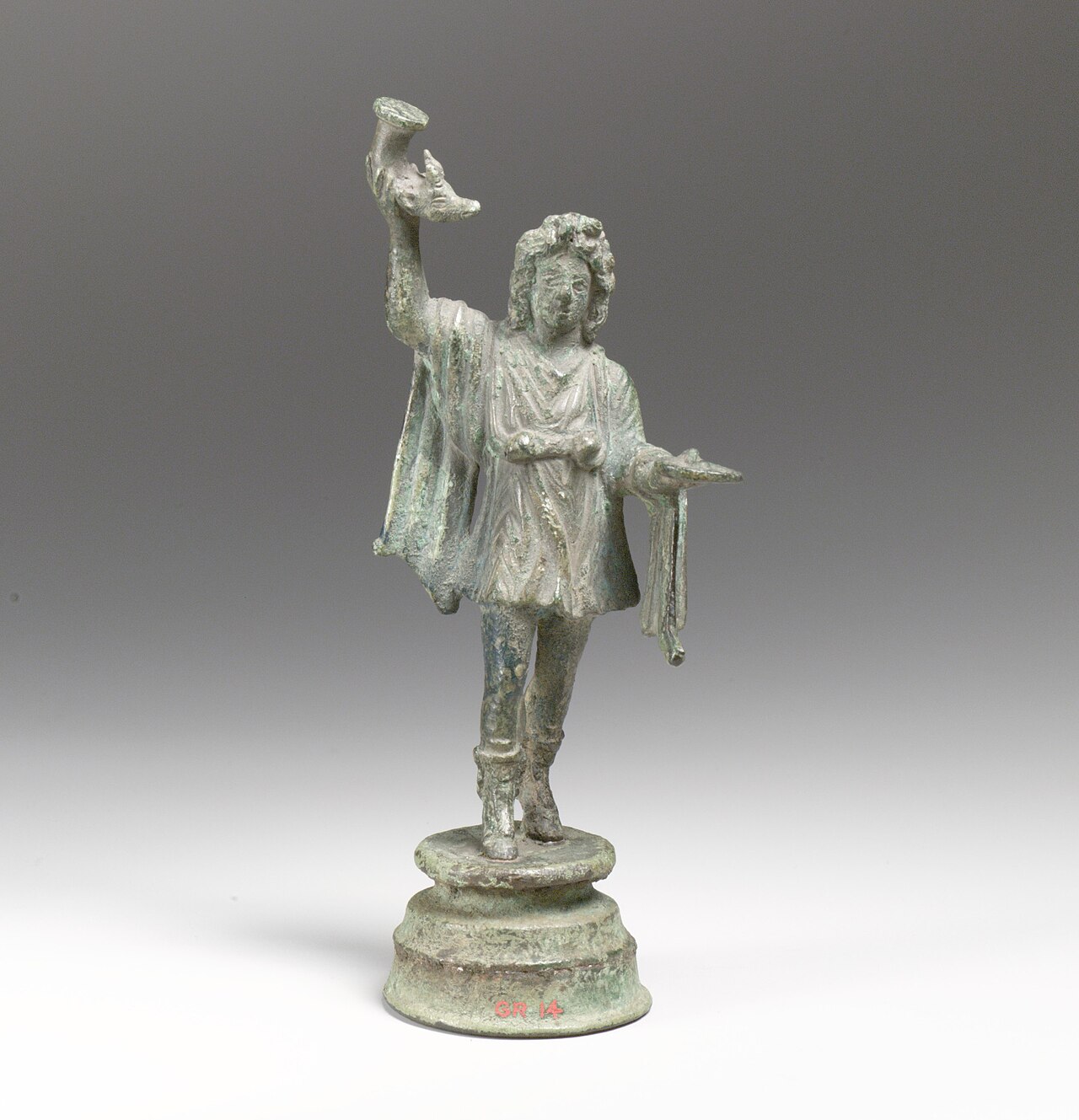
- The Lares. Young dancing spirits with a drinking horn in one hand and a dish in the other. They guarded the house, the fields and the crossroads.†
- The Penates. Spirits of the store cupboard, the penus, where the food was kept. In Virgil, Aeneas carries his household gods out of burning Troy, and Rome begins.†
- The genius of the place. Places had one too, the genius loci, often painted as a snake. English kept the phrase for the feel of a place.†
Credits
- Pictures, all via Wikimedia Commons, each linked in its caption above: Rubens (Judgment of Paris; Head of Medusa, with Snyders), Botticelli, Caravaggio, Jebulon (photograph of Cellini's bronze), Jombert, Denslow, Rackham, Waterhouse, Denys de Montfort, NASA with its partners (Pluto, Ceres, the sprites), Luigi Bazzani (the Vettii lararium), the Metropolitan Museum of Art (the dancing Lar) and Yair Haklai (photograph of the genius of Augustus).
- Videos, linked and not copied: the Uffizi Galleries (Discover Botticelli; Caravaggio, Medusa; The Loggia dei Lanzi) Smarthistory with Beth Harris and Steven Zucker (Botticelli, on ArtBabble), and the European Space Agency (red sprite).
- Words: Ovid, Metamorphoses; Plutarch, On Isis and Osiris; Hesiod, Theogony; L. Frank Baum, The Wonderful Wizard of Oz; Erik Pontoppidan, The Natural History of Norway; the logs of Columbus and Hudson; NASA, ESA, the Smithsonian, NOAA and the Natural History Museum, London.