BREAD & CIRCUSES
“…duas tantum res anxius optat, panem et circenses.”
“…it anxiously wants two things only: bread and circuses.” The Roman poet Juvenal, Satires 10.81, around AD 100, on a people that had once handed out armies and offices and now asked only to be fed and entertained. Read the Latin.
This page is the two things: the grain Rome gave away, and the shows it put on, from the racetrack that held a quarter of a million people to the arena with a machine room under its floor. Then the night the fans nearly took a city.
The story, never the claim. What the sources say, and which source.
The bread
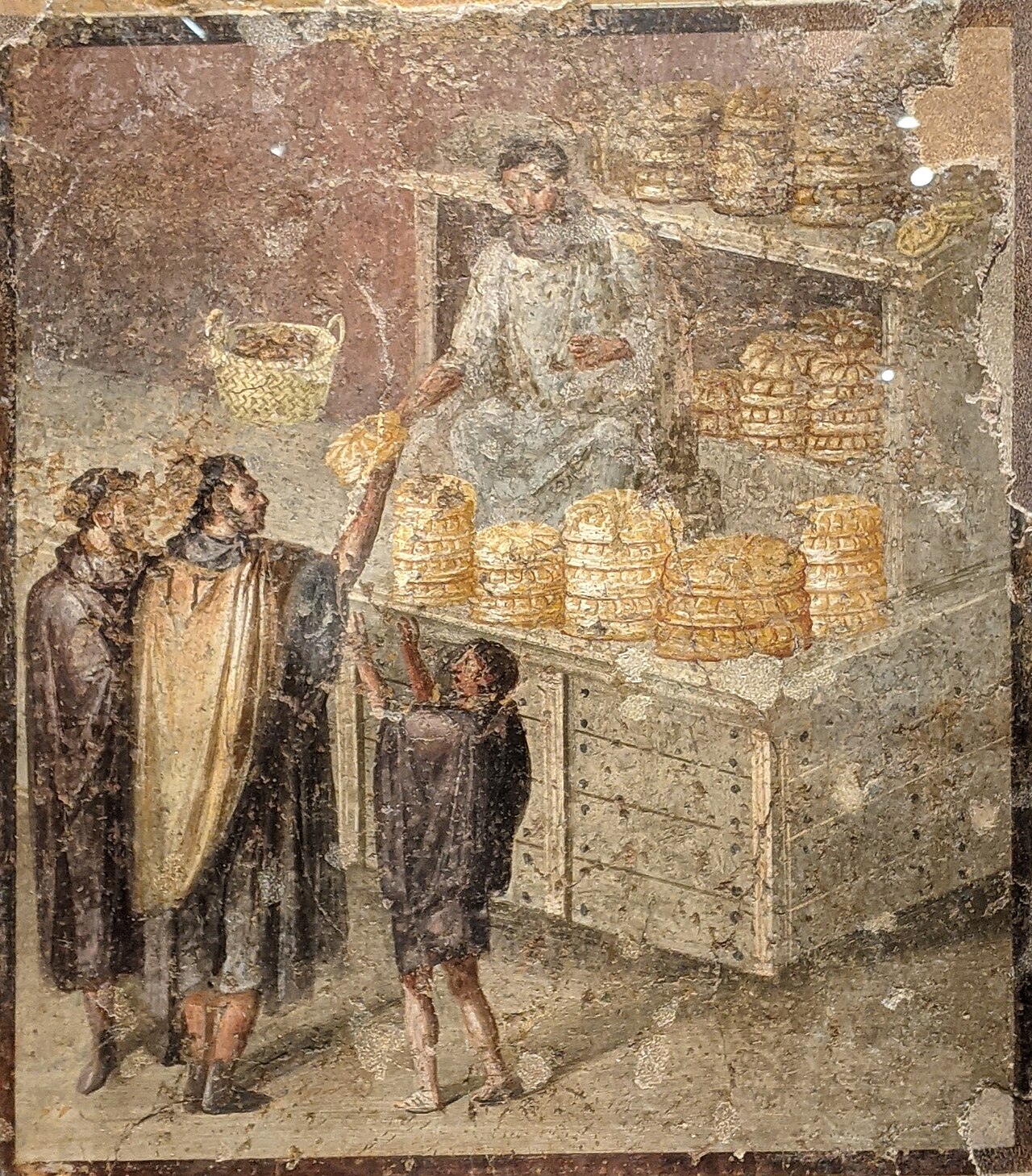
Rome fed its citizens from the state granary, and the hand that fed them collected the thanks.
- 123 BC. The tribune Gaius Gracchus passes a law selling grain to citizens below market price.†
- 58 BC. The tribune Clodius makes it free.†
- Under Augustus. The list is cut to about 200,000 men, and the emperor runs the grain supply himself.†
The races
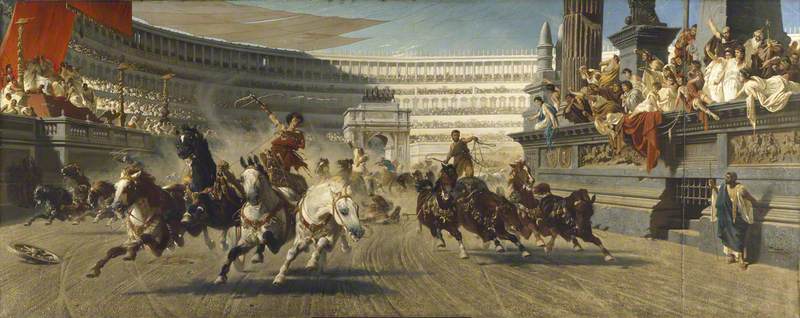
The Circus Maximus, in the valley between the Palatine and Aventine hills, was the largest building for public entertainment in the ancient world: about 600 metres long and 140 wide, by the city of Rome's own tourism office.
- 600 mlong, 140 m wide. Turismo Roma
- 150,000seats, a conservative estimate. Ancient Rome Live
- 250,000"up to, we think", Bernard Frischer of Rome Reborn. Smarthistory
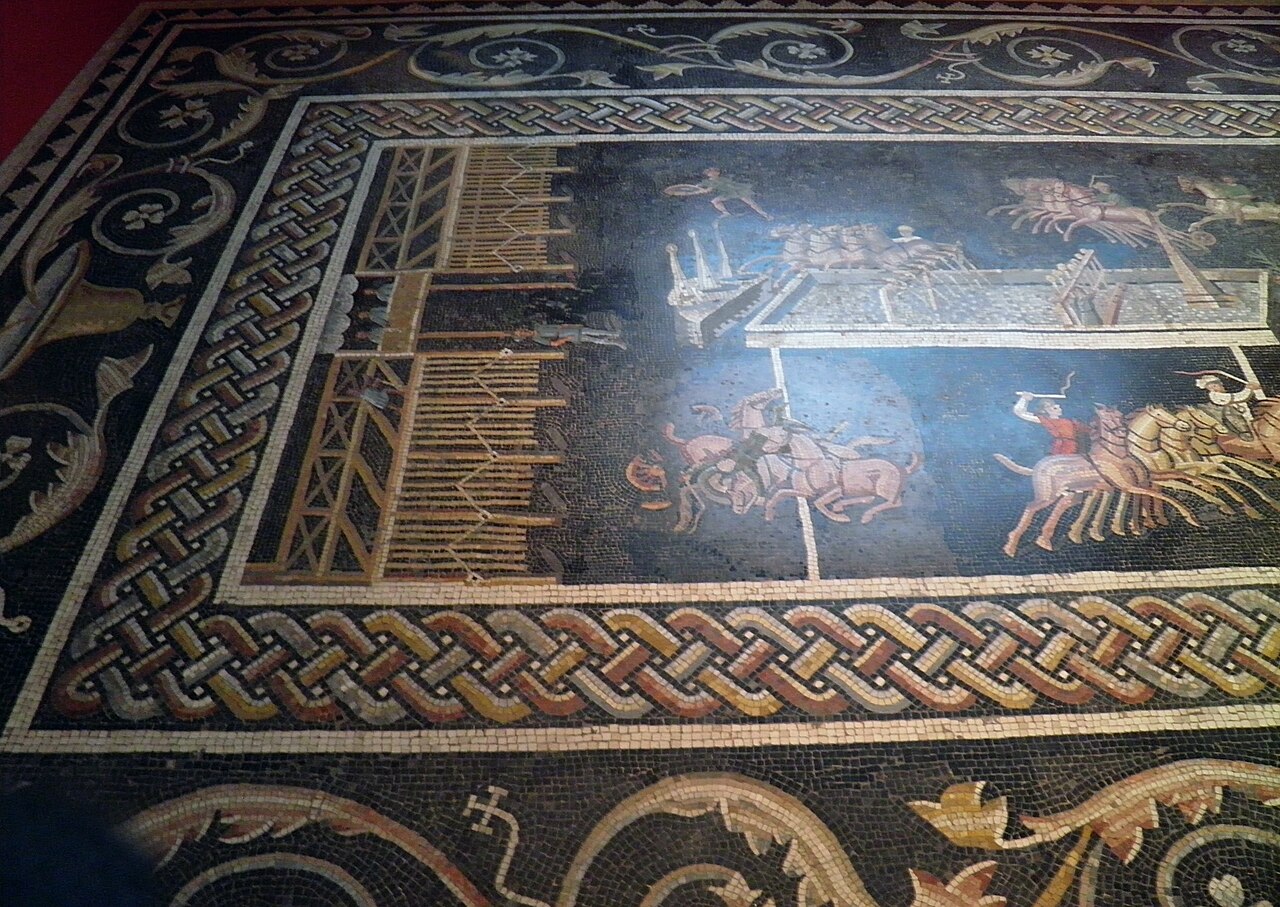
Four-horse chariots ran seven laps around a central barrier with an Egyptian obelisk on it, brought to Rome by Augustus. The crashes had a name, naufragia, "shipwrecks".† The drivers were idols, and the crowd sat by the colour of its team.
Watch
Pick your colour
Every Roman at the races was a fan of one of four teams, the factiones, and the green, blue, red and white split the stands.
The arena
The Romans called it the Flavian Amphitheatre. "Colosseum" came in the Middle Ages, from a colossal statue that stood beside it. The Flavian emperors built it on land Nero had taken for his palace, and handed it back to the people as a gift. So says the archaeologist Bernard Frischer in Smarthistory's video.
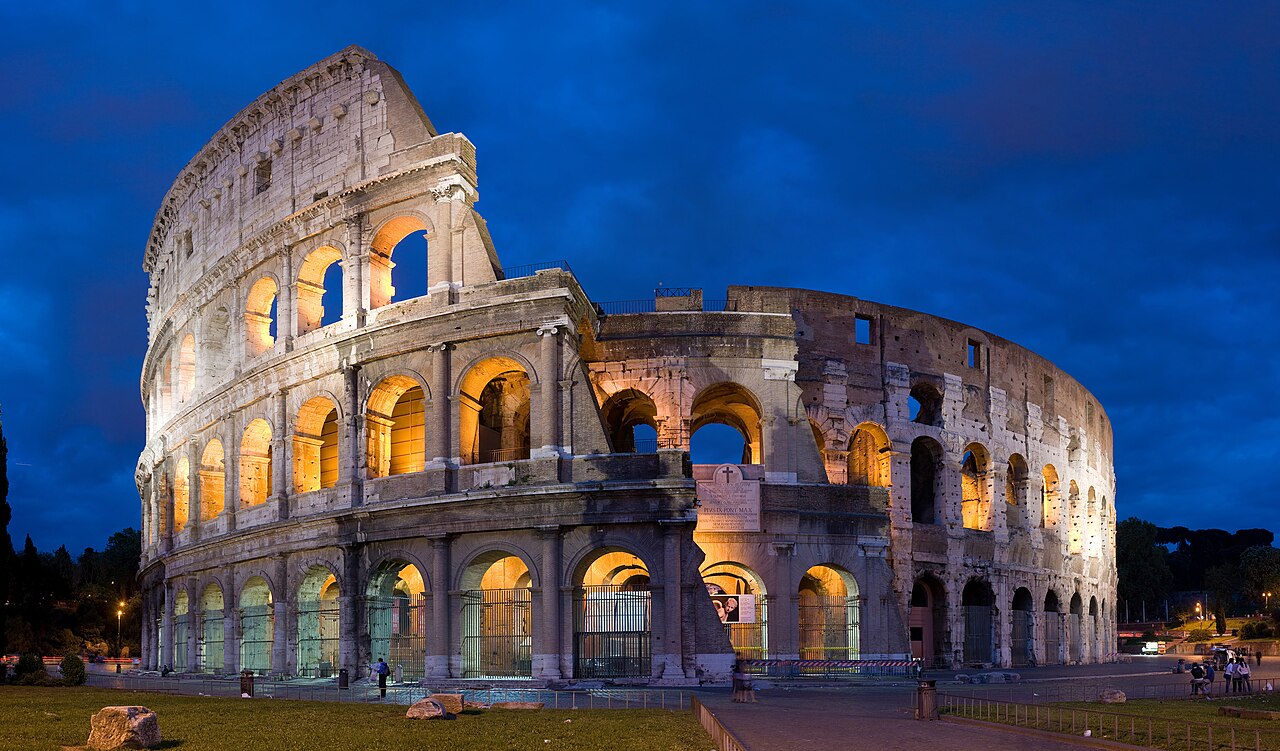
A day at the games
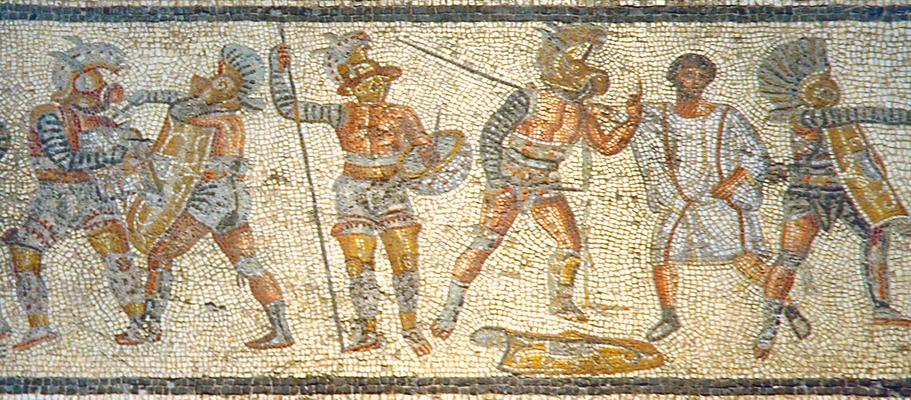
- Morning: animal hunts. Tigers, lions, elephants and rhinoceroses were shipped in to be killed.
- Midday: executions of prisoners, at the lunch hour, with the crowd eating.
- Afternoon: the gladiators.
The day as Bernard Frischer lays it out for Smarthistory.
The machine room
The arena floor was wooden planks with a trapdoor every few metres. Underneath, in the hypogeum, slaves worked lifts by hand to raise animals, scenery and props into the light. The floor is gone now, so you can look straight down into it.
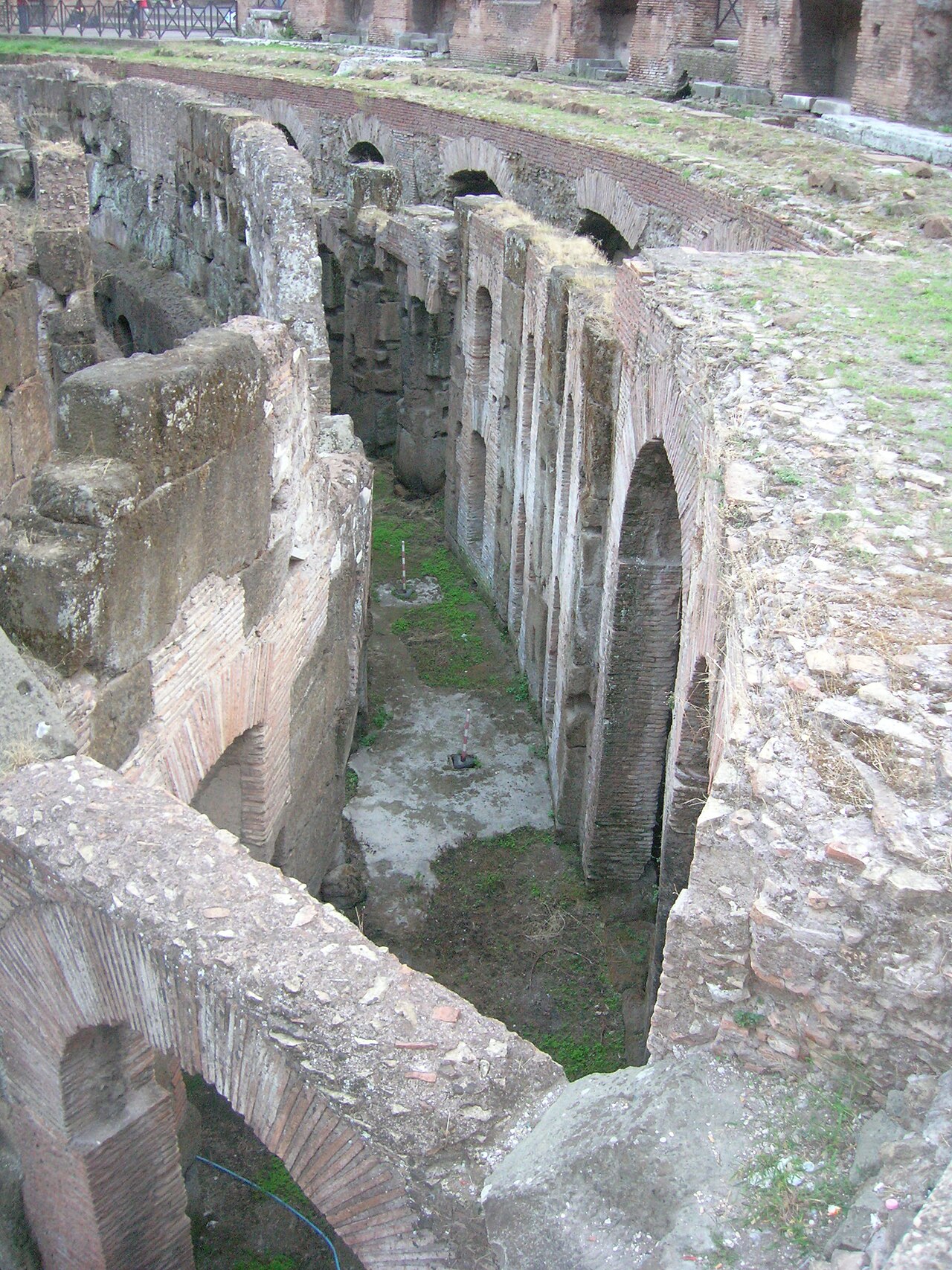
Watch
The thumb
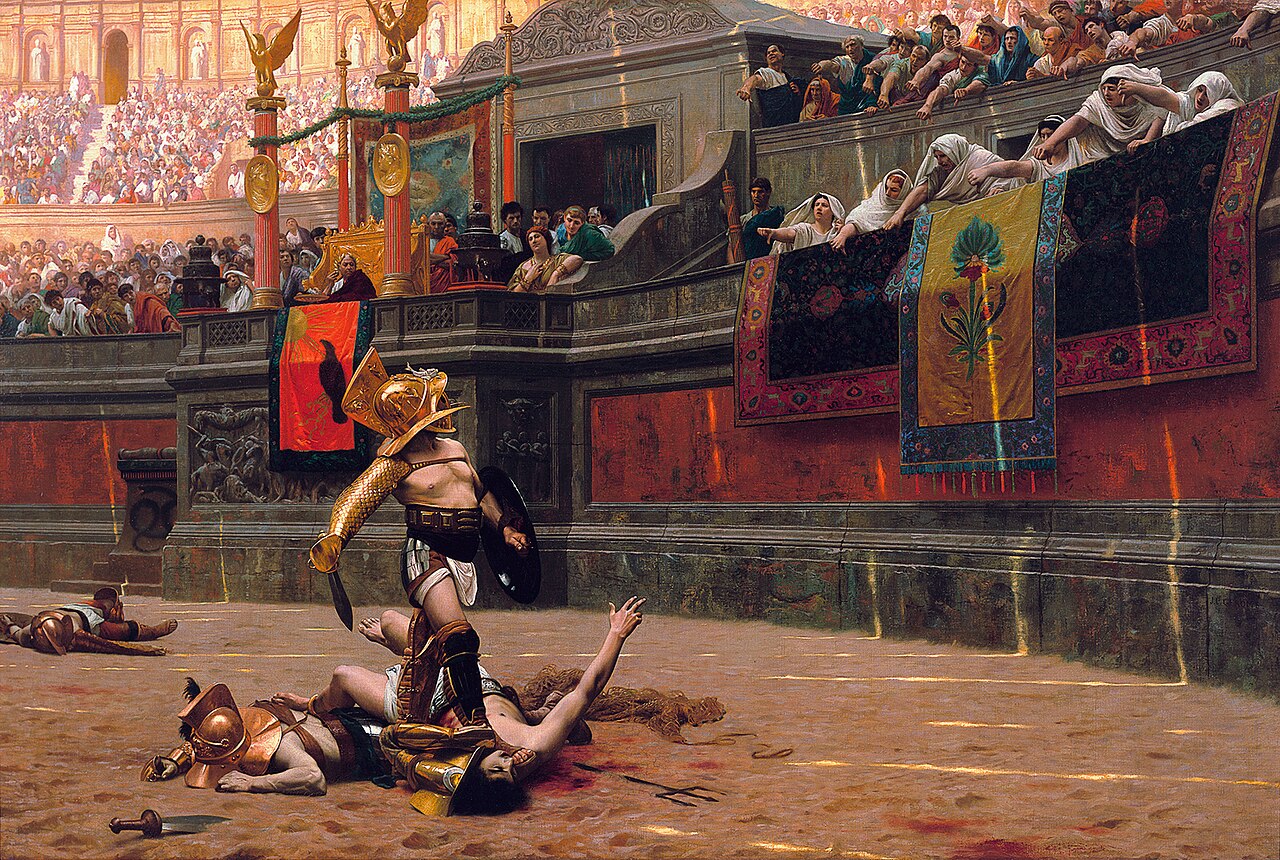
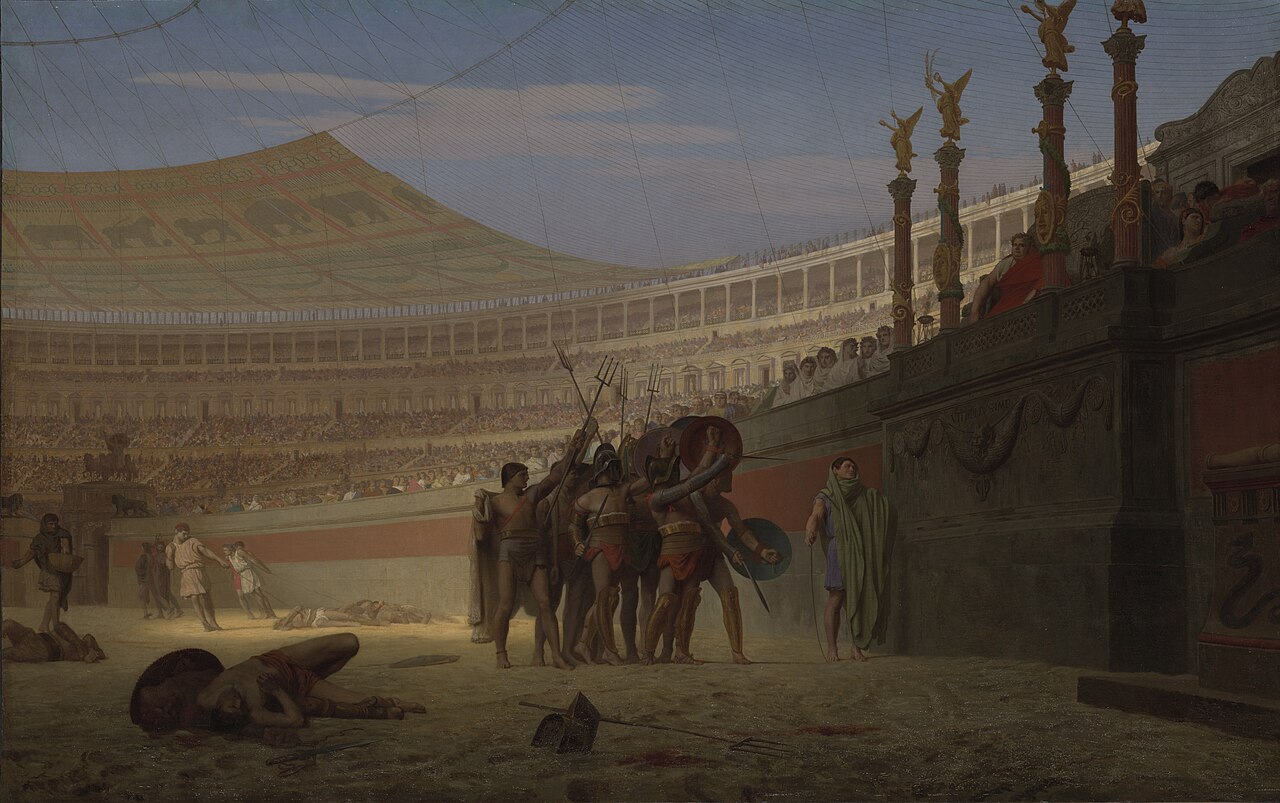
Thumbs down means death: everybody knows that from the movies. The Latin only says pollice verso, "with a turned thumb", and Juvenal uses it of a crowd ordering a kill (Satires 3.36).† Which way the thumb turned, no Roman source says.† Gérôme painted it pointing down in 1872, and his painting is the one that stuck.
The other line everybody knows, "Hail, Caesar, those about to die salute you", has one ancient source. Suetonius puts it in the mouths of men about to fight a staged sea battle for the emperor Claudius, not in the arena.†
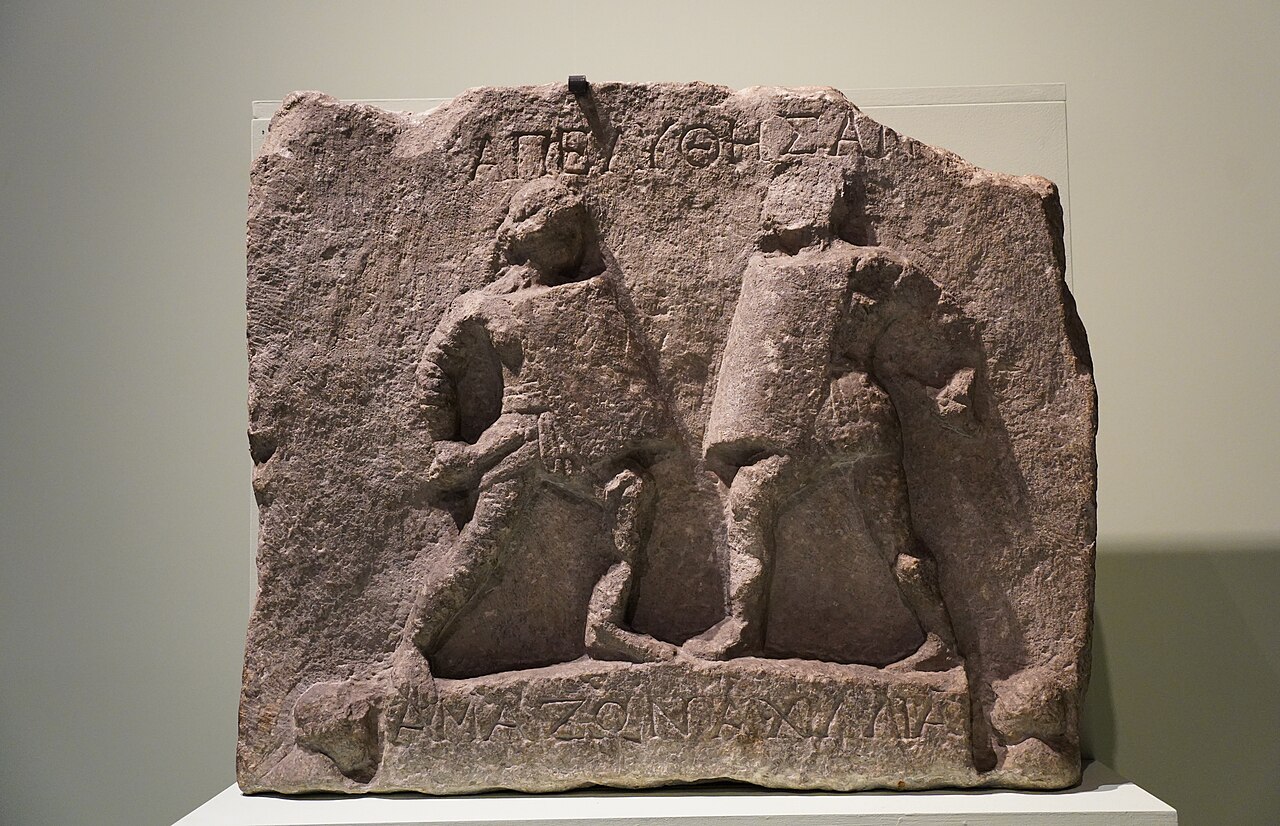
Women in the arena
They fought. A stone relief from Halicarnassus, now in the British Museum, shows two women gladiators squared off. Their stage names are carved under their feet: Amazon and Achillia, one after the warrior women of myth, one after Achilles. The word above them says they were released, an honourable end to the bout for both.†
The night the fans took the city
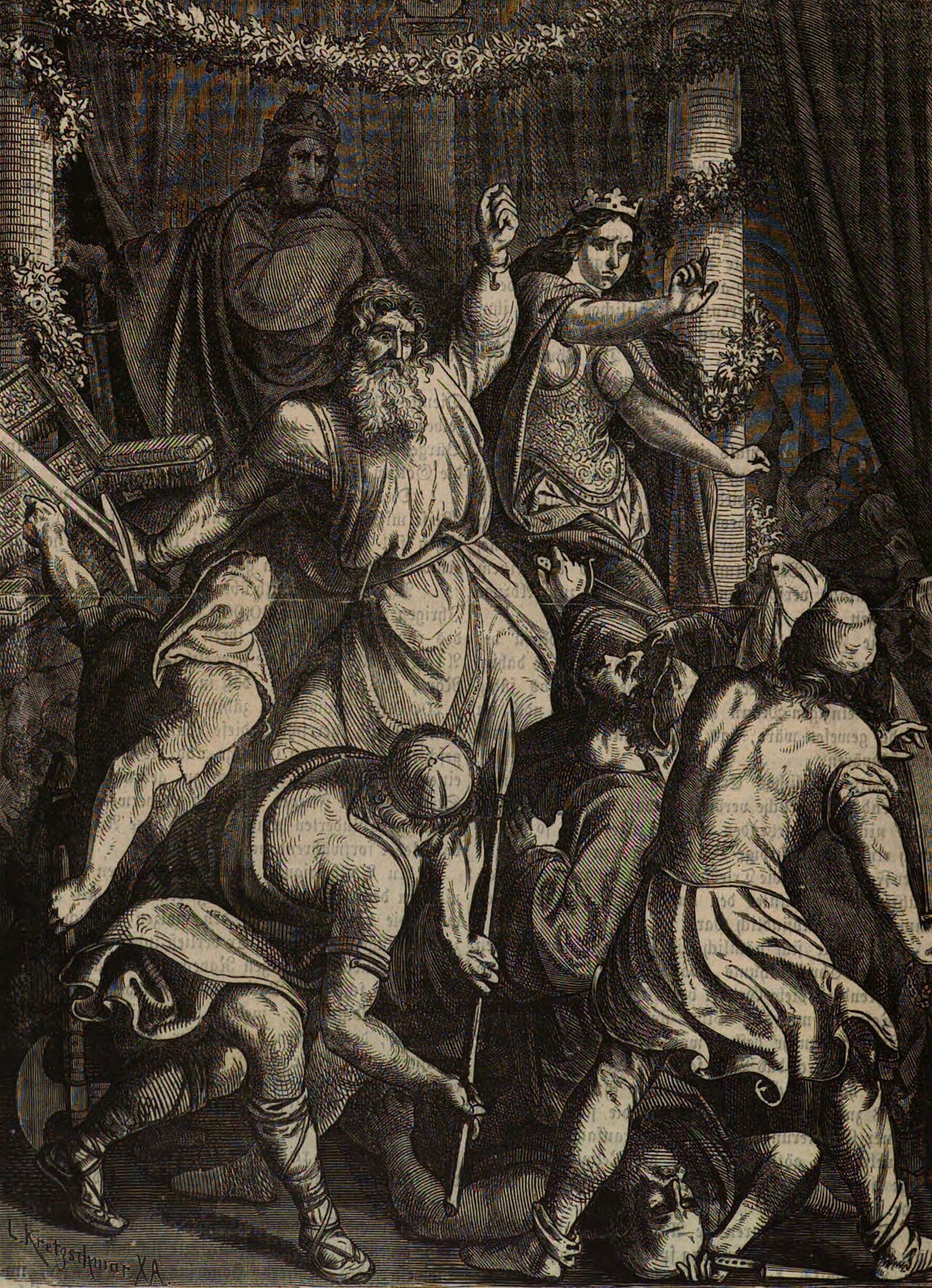
Constantinople, January 532. The Blues and the Greens ran more than the races. They were street organisations with their own seats, chants and muscle.† When the emperor Justinian would not pardon men from both factions, the two did the one thing nobody planned for. They united, shouted "Nika!" ("Win!" or "Conquer!"), and set the city on fire.†
- 5 daysof rioting, by the usual account†
- 1emperor ready to run, until the empress Theodora spoke†
- ~30,000killed in the Hippodrome when the soldiers went in, by Procopius's count†
The historian Procopius has Theodora refuse to flee: royalty, she says, makes a good burial shroud. The generals Belisarius and Mundus trapped the crowd inside the Hippodrome. The church burned in the riot was rebuilt as the Hagia Sophia.†
The word today
"Circus" is on the Lexicon. Three tapes, three decades, three countries, and the same move every time. The person being questioned calls the room a circus.
- 1991, Washington. A Supreme Court nominee to the Senate Judiciary Committee: "This is a circus. It's a national disgrace." American Rhetoric, from the C-SPAN audio
- 2023, Sarajevo. A regional leader after a court hearing: "This is a political process; this is a circus," RFE/RL
- 2025, Madrid. A prime minister to a Senate inquiry committee, in AFP's English: "I think this is a circus." AFP via Kuwait Times
Credits
- Pictures, all via Wikimedia Commons, each linked in its caption above: Jean-Léon Gérôme (Pollice Verso; Ave Caesar), Tyler Bell (photograph of the Pompeii bread painting), Alexander von Wagner, Carole Raddato (photograph of the Lyon mosaic), Diliff, Jouri de vylder, TimeTravelRome (photograph of the Halicarnassus relief), the Zliten mosaic, and L. Kretzschmar.
- Videos, linked and not copied: Smarthistory with Bernard Frischer and Steven Zucker (The Colosseum; Ancient Rome with Rome Reborn).
- Figures: Turismo Roma (the Circus Maximus measurements), Ancient Rome Live and Smarthistory (seating estimates). Latin: The Latin Library.